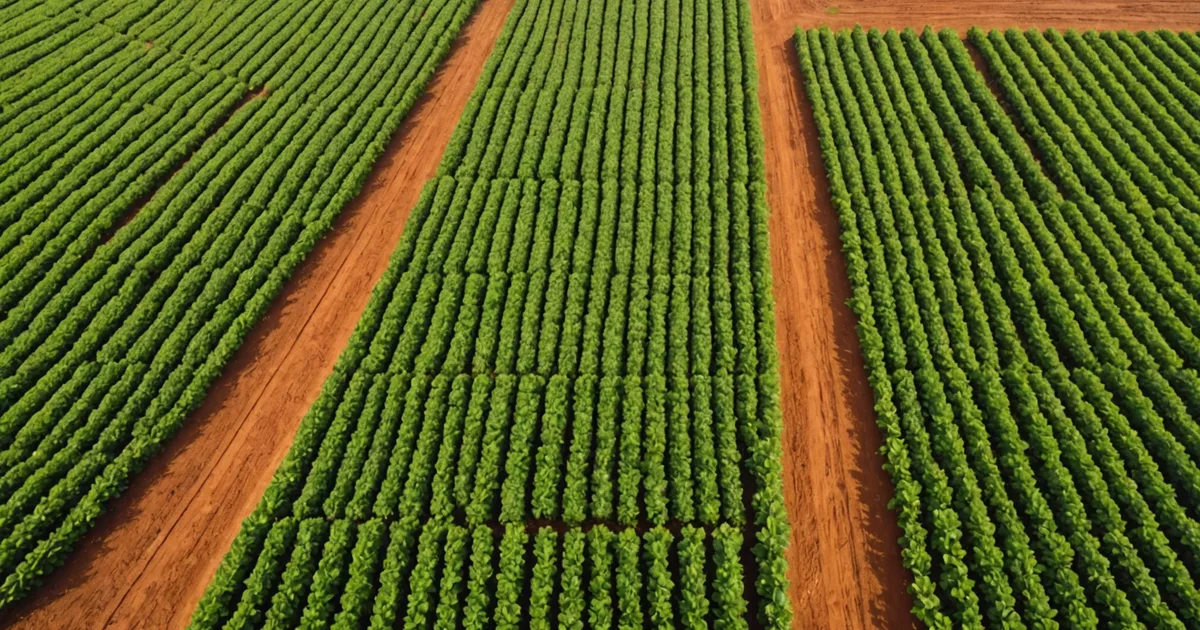
Among Brazil's approximately 250,000 coffee farms smaller than 50 hectares, fewer than one in seven had any formal credit line according to the IBGE 2017 Agricultural Census. That figure has not changed materially since. A grower turned away by a bank branch in Pouso Alegre is usually working land where every agronomic factor that shapes repayment capacity can be assessed from public satellite imagery within 24 hours. The issue is not risk. It is the data pipeline.
Information needed to underwrite a coffee smallholder loan at plot level is available, mostly public, and has been building for more than a decade in satellite archives, cooperative records, and national soil surveys. Brazilian bank underwriting, however, was not designed to interpret it.
Existing Data at the Plot Level
An agricultural lender that builds a data intake pipeline instead of relying only on paperwork can access at least four useful production data categories for a Sul de Minas or Cerrado Mineiro farm.
First, ESA Sentinel-2 satellite imagery produces NDVI (Normalized Difference Vegetation Index) canopy health readings at 10-metre resolution, revisited every five days. The data is publicly available at no cost through the Copernicus Open Access Hub. For a grower managing an 8-hectare plot near Sao Sebastiao do Paraiso, NDVI time series can be retrieved back to 2017. Stable, high NDVI readings during flowering and fruit development are strongly associated with yield per hectare, the cash flow used to repay the loan.
Second, EMBRAPA (Empresa Brasileira de Pesquisa Agropecuaria) holds national soil classification databases covering organic matter, clay percentage, and drainage conditions across Brazilian farmland. In production terms, the distinction between a latosol vermelho-amarelo (red-yellow oxisol) and a thin, shallow litolic soil is significant. Across the Sul de Minas coffee region, latosol soils with sufficient organic content and strong water retention repeatedly produce higher coffee yields per hectare than soils with less organic matter.
Third, coffee cooperatives retain years of member yield records. With grower authorization, three to five seasons of per-hectare delivery figures and cherry processing grades provide a direct production history. For credit assessment, this can be more informative than a generic income tax return because it represents actual farm output, rather than a tax category that may not match agricultural cash flow cycles.
Fourth, altitude does not change. NASA's SRTM digital elevation model supplies altitude readings for any GPS polygon. In Sul de Minas, elevations above 900 meters are associated with specialty-grade coffee, cooler conditions that extend bean development, and higher cooperative price premiums. A grower's altitude zone is a permanent input and does not need to be checked again between lending cycles.
Why Banks Leave This Data Unused
The typical Banco do Brasil or Sicoob rural credit application centers on tax returns, property registry papers, and SERASA bureau scores. These records come in formats that a generalist credit analyst can process with commercial banking tools developed over decades. They do not call for satellite image processing, soil map searches, or cooperative data connections.
A pipeline must ingest GPS boundaries, retrieve NDVI through a satellite API, match locations to EMBRAPA soil maps, and assess yield consistency from cooperative records. A branch lending team does not have this infrastructure. The institutional barrier is real, but it is not evidence of bad faith. Commercial banks lend at volumes where building this system for small rural loans does not warrant the expense.
PRONAF (Programa Nacional de Fortalecimento da Agricultura Familiar) was created to close part of this gap by offering subsidized credit to family farmers. Yet PRONAF still routes financing through the same banks and relies on the same documentation. A grower unable to provide an acceptable income tax return and an asset statement in the bank's format may still be rejected, even when a government guarantee program supports the loan.
The outcome is structural exclusion. Farmers with sound operations, steady yields, and productive soils are refused not because their businesses are unsafe, but because the information describing them is unavailable in the format the bank accepts.
What Plot Data Reveals About Creditworthiness
A credit model based on production records rather than documents produces a more detailed view of smallholder coffee risk than a generic default rate can provide.
Sul de Minas coffee follows a well-established biennial bearing cycle. A strong harvest in one year is generally followed by a weaker one while the plant recovers. This is a predictable cycle that can be managed through loan design, not a default signal. A farmer showing alternating yet consistently adequate per-hectare yields across four seasons is not necessarily high risk. This borrower has a known production pattern and needs repayment aligned with harvests, rather than monthly installments created for a salaried worker.
Plot-level NDVI also provides a forward-looking signal. A canopy health reading taken 60 days before harvest indicates the likely coming yield in real time. Paired with INMET (Instituto Nacional de Meteorologia) weather data on precipitation during fruit development, it offers a more current and plot-specific underwriting view than a tax return from two years earlier.
Our early-access pilot in Sul de Minas focuses on growers operating between 5 and 25 hectares: commercial coffee producers who deliver to cooperative processing and face tight working capital during input season before the main harvest credit cycle. The recurring pattern is clear: growers with five or more years of steady cooperative delivery records, NDVI patterns that cleanly follow seasonal canopy cycles, and elevations above 850 meters tend to fall within the moderate-to-low risk portion of our scoring range. By production measures, these are not marginal borrowers.
The Gap Between Data and Documentation
Compare that production picture with the file a bank branch sees when the same grower arrives: no income tax return showing farm cash flow, since many rural smallholders use simplified tax categories that are not calibrated to agricultural cycles, a SERASA record with little history or one registered debt, and a land document that may be a registered Declaracao do CAR instead of a complete INCRA matricula. The bank sees proxies for missing information. A data-based model sees a production history.
This disconnect helps explain why the financing gap has remained despite years of policy attention. PRONAF lowers borrowing costs for eligible farmers. It does not provide the information infrastructure used to decide who qualifies in the first place. Those most often excluded are the borrowers whose productive reality is easiest to observe through agronomic data and hardest to see in formal financial records.
Plot-level production information does not capture every material credit risk on a smallholder farm. The model does not include market price risk. Legal disputes over land tenure do not appear in NDVI readings. Management quality is represented only in part by yield consistency. These limitations are real, so they inform our loan terms and the issues our credit team examines manually in edge cases.
Infrastructure, Not Charity
Treating the smallholder credit gap as a social issue to be addressed only with subsidized programs overlooks the real point of intervention. The gap remains because turning production information into a credit model requires infrastructure that established lenders have no unit-economics reason to build for small loans. A R$500,000 agribusiness credit line and a R$20,000 smallholder working capital loan carry roughly comparable institutional processing costs. The smaller loan is therefore less attractive to originate.
Automation changes those economics. At our current scale, satellite data costs almost nothing per query. Soil classification searches run programmatically. Once a digital cooperative connection exists, yield records arrive without manual work. Underwriting a R$15,000 loan through this pipeline costs structurally less than reviewing documents for the same loan, even before counting the time the grower saves.
Our 48-hour decision window comes from this automation. We are not making hasty decisions. We are taking out the manual steps that stretch a traditional process by weeks without improving the quality of the risk assessment. The information needed to underwrite coffee smallholders has always been available at plot level. Culttivo set out to solve the engineering challenge of building a pipeline that can read it.