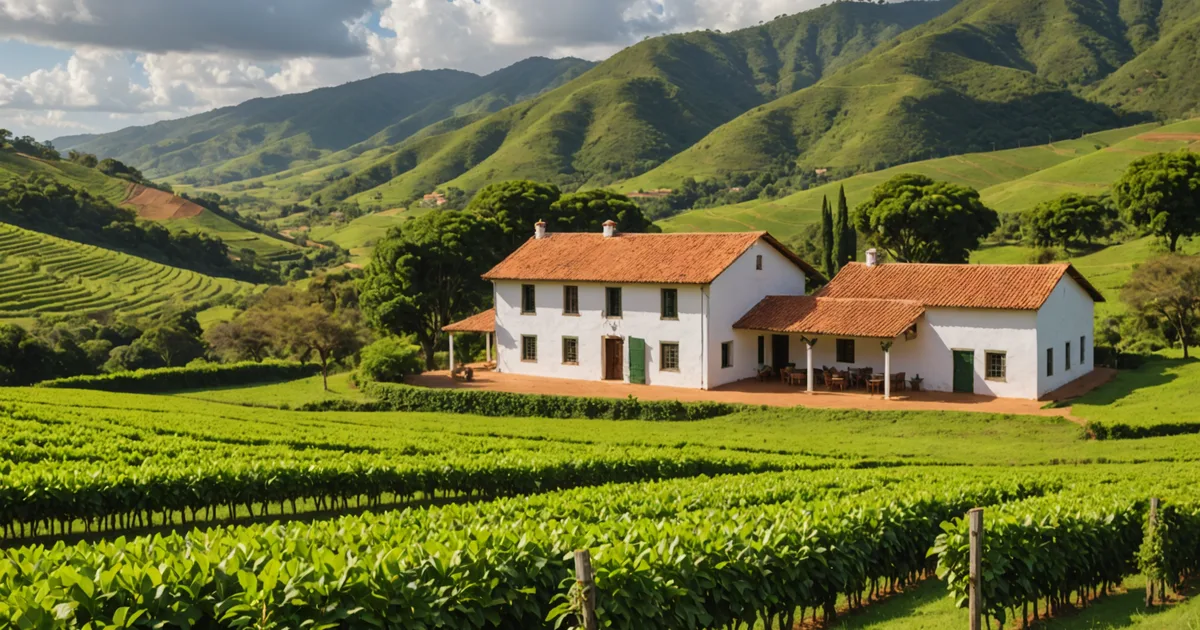
Minas Gerais supplies approximately half of Brazil's specialty coffee, distributed across three recognized geographic indications: Sul de Minas, Cerrado Mineiro, and Chapada de Minas. These areas differ in elevation, rainfall, and cup-quality profiles. Yet they share a financing challenge: by a wide margin, the growers producing this coffee are small-scale operators who cannot obtain formal credit through the channels nominally available to them.
The Extent of the Credit Shortfall
Brazil's agricultural credit system directs substantial funding each year. BNDES (Banco Nacional de Desenvolvimento Economico e Social) and Banco do Brasil together provide most formal rural credit in Brazil. The government PRONAF program (Programa Nacional de Fortalecimento da Agricultura Familiar) targets small family farms, offering subsidized rates and simpler documentation than commercial rural credit.
Even with these tools in place, the 2017 Censo Agropecuario conducted by IBGE reported that, throughout Brazil, most agricultural establishments below 10 hectares had used no formal credit during the prior five-year period. In Minas Gerais coffee areas, smallholder access reflects both limits in program design and practical obstacles during the application process.
According to Banco Central do Brasil data on rural credit portfolio composition, formal agricultural lending is weighted toward operations above the PRONAF size thresholds. Properties classified as "empresarial" (commercial agriculture) make up a small portion of rural properties but receive most total credit disbursements. Family farms receive a far smaller absolute share, despite representing most agricultural establishments by number.
PRONAF in Practice and Its Limitations
PRONAF is delivered through accredited banks and rural cooperatives. Qualified borrowers must have a DAP (Declaracao de Aptidao ao PRONAF), which confirms their family-farmer status. EMATER (the rural extension agency), affiliated cooperatives, or both issue the DAP, requiring records covering rural property registration, income classification, and residence. Most PRONAF sub-programs provide rates from 3 to 6 percent per year, considerably below commercial rates.
The main constraint is not the interest rate. It is the paperwork and the actual presence of accredited institutions in rural municipalities. Securing a DAP involves an EMATER visit or cooperative enrollment. Where EMATER coverage is limited, a farm-visit appointment may take several months. Many smallholders cultivate plots spread across multiple cadastral registrations or hold land informally, making property documentation harder to complete. Growers without a completed CAR (Cadastro Ambiental Rural) registration may encounter further obstacles.
Even growers who finish the PRONAF paperwork successfully may find the family-farmer credit limits inadequate for coffee working capital. On a 10-hectare plot, fertilizer, pesticide applications, and harvest labor can cost R$30,000 to R$50,000 per season at current input prices.
The Informal Financing Layer
When formal credit is unavailable, Minas Gerais smallholders generally rely on three informal arrangements. The first is financing from input suppliers. Agrochemical distributors and cooperative input divisions provide fertilizers and pest-control products on credit, with repayment taken from the harvest through grain delivery. Effective annual rates range from 20 to 40 percent, depending on the supplier and location, although growers are not always shown these arrangements in those terms.
The second arrangement involves advance payments from coffee buyers and processers. Before harvest, a roasting house or export trader provides cash against a commitment to deliver future coffee at a fixed price. This functions as pre-harvest finance, and the discount against the spot price can represent a high implicit financing cost, especially when commodity prices change during the contract.
The third is informal borrowing through cooperative member networks or from local money-lenders. Rates differ considerably, with cooperative credit managers in Sul de Minas estimating typical informal loans at 3 to 5 percent per month, equivalent to 36 to 60 percent per year. At that level, borrowing for a difficult harvest can create debt that requires several later harvests to repay.
Regional Differences Across Minas Gerais
Access to credit varies among Minas Gerais coffee regions. Sul de Minas has a more developed cooperative network than Cerrado Mineiro or Chapada de Minas. Large cooperatives in Varginha, Alfenas, and Pocos de Caldas maintain credit teams with rural officers who visit farms and help process PRONAF documents. Members therefore tend to reach formal credit more easily than non-members and growers in areas with fewer cooperatives.
The Cerrado Mineiro area, including Patrocinio and Araguari, follows a different structural pattern. Farms are generally larger, and mechanized commercial coffee production is more common. Larger Cerrado producers have comparatively stronger credit access. Smallholders in the region still encounter the same SERASA and documentation obstacles faced by their counterparts in Sul de Minas.
Chapada de Minas, located in the Serra do Espinhaco range, is the most distant of the three principal zones and has the thinnest formal financial network. Its specialty coffees earn substantial international premiums, yet the growers responsible for them are among the state's least connected to formal financial services.
The Sectoral Cost of the Credit Gap
The financial impact of restricted credit access is difficult to measure precisely, but its consequences are apparent in the field. Growers unable to apply enough fertilizer in one season may see lower yields in the next, since coffee arabica is vulnerable to nutritional stress while the fruit buds for the following harvest develop. Someone borrowing at 40 percent per year for inputs faces costs that make canopy renewal, irrigation, and post-harvest improvements for specialty premiums difficult to fund.
The shortfall also restricts diversification and risk planning. A grower with sufficient capital can direct part of production toward specialty certifications such as Fair Trade, organic, or geographic indication, all of which require spending on certification and premium-quality harvesting. Growers with narrow margins and costly informal credit cannot make that investment, leaving them dependent on the lower-priced commodity market.
Why Minas Gerais Is Relevant to Agricultural Lenders
For lenders, the Minas Gerais smallholder coffee market is a sizable, underserved borrower group within a sector that has a documented production history. The coffee-growing geography is clearly defined. Cooperatives hold yield information for many active growers. Satellite imagery and soil maps can supply independent evidence of production potential for growers without formal records.
We are not claiming that the gap can close quickly or that every declined application would make a sound loan. Some smallholders are genuinely high-risk borrowers because of poor site conditions, unsustainable informal debt, or management issues that remote data cannot reveal. The point is that the information needed to separate viable from unviable borrowers in this group now exists and can be combined in an underwriting process.
This is the market we serve. Our early-access pilot work is focused on Sul de Minas because its cooperative data network is strongest and offers the strictest setting for validating the scoring model. We plan to move into Cerrado Mineiro and Chapada de Minas after calibrating the model's regional parameters.